
California’s legal cannabis industry operates under one of the most tightly regulated frameworks in the United States. The Department of Cannabis Control (DCC) has established a detailed set of baseline security standards designed to safeguard licensed premises and maintain public confidence in the industry.
These requirements aim to ensure that every cannabis business, whether it be a cultivation site or retail dispensary, maintains basic measures to prevent theft and unauthorized access. Yet the reality is that compliance does not always equal protection.
As the legal market grows, so too does the sophistication of criminal activity targeting it. Organized operations have learned to exploit the gaps left by regulations that were never designed to address every threat. For California’s cannabis businesses, the difference between meeting the letter of the law and achieving real security can mean the difference between ongoing stability and devastating loss.
Understanding What the DCC Requires
Every licensed cannabis facility in California must maintain a comprehensive, written security plan that outlines its physical and digital protection measures. These plans serve as proof of compliance during licensing and inspections, ensuring the business meets the DCC’s minimum requirements.
Those requirements begin with video surveillance. Facilities must maintain continuous 24/7 digital video coverage with cameras capable of recording at a minimum resolution of 1280 by 720 pixels. Cameras must be permanently mounted, positioned to capture every activity within 20 feet of all entry and exit points, and cover any area where cannabis products are weighed, packed, stored, loaded, or moved.
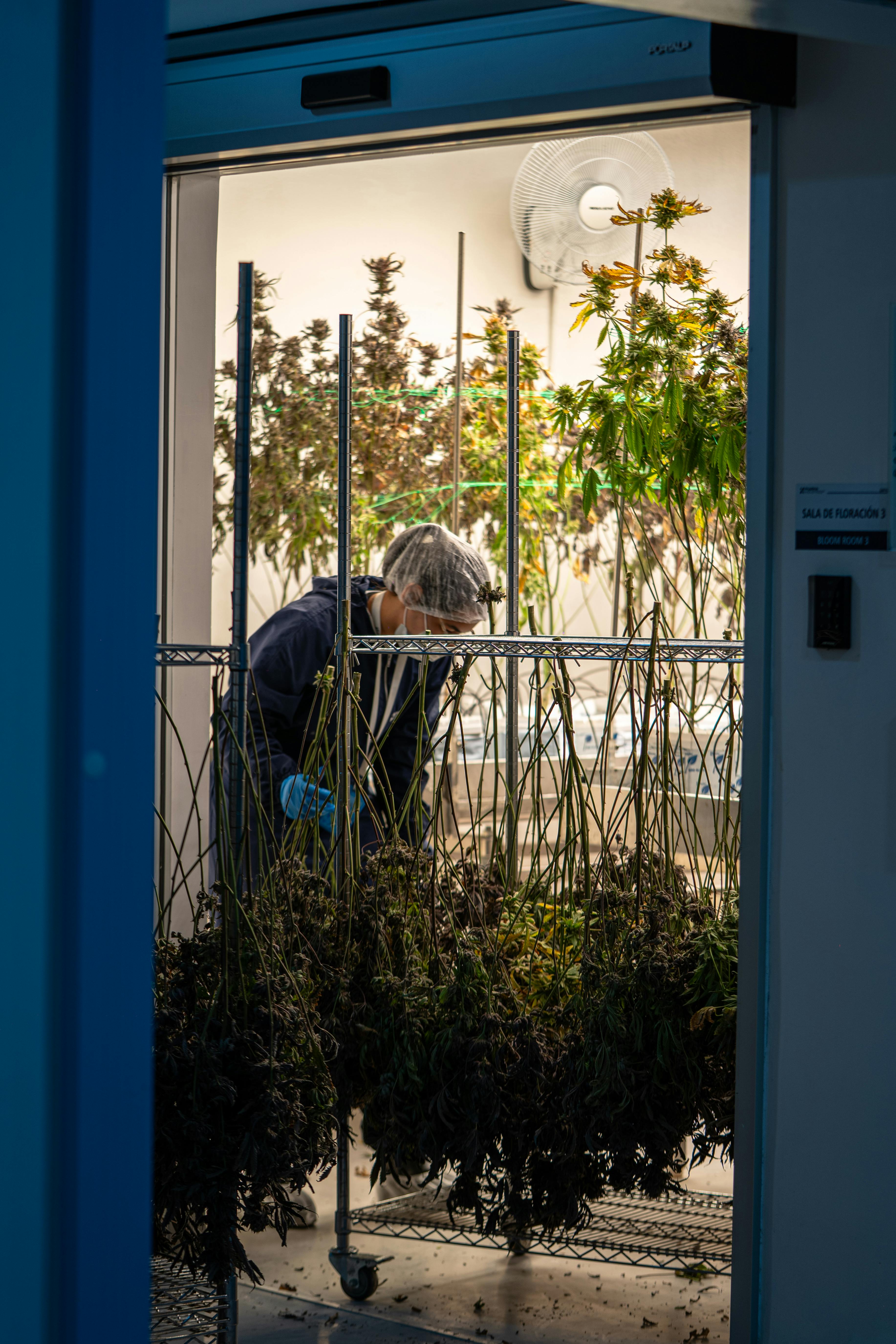
Access control rules restrict entry to authorized personnel only, allowing escorted visitors or vendors under supervision but prohibiting unapproved individuals from limited-access zones. Alarm systems are required in all enclosed spaces, with fire and burglar alarms centrally monitored and connected to properly licensed monitoring companies. These systems must include passive infrared motion detectors and remain active when the facility is vacant.
Finally, the DCC mandates physical security measures such as perimeter fencing where appropriate, proper lighting for surveillance, secure product and cash storage, and barriers to prevent unauthorized entry. Collectively, these requirements establish a minimum security baseline for all cannabis businesses operating in the state.
The Growing Threat Beyond Compliance
Despite these requirements, California’s cannabis sector has seen a sharp rise in targeted criminal activity. Between 2021 and 2022, reported burglaries and break-ins at licensed cannabis businesses more than doubled from 147 incidents to 329. Los Angeles County alone reported 111 incidents in 2022, while Alameda County documented 52.
The true number of crimes is likely higher, as many businesses experience repeat victimization or avoid reporting for fear of reputational harm. The trend illustrates the uncomfortable truth that even businesses that fully comply with DCC standards remain highly vulnerable.
Criminal groups have learned to bypass conventional surveillance systems, disable standard alarms, and exploit predictable blind spots common in compliance-based setups. These attacks are often coordinated, fast-moving, and executed with detailed knowledge of how cannabis businesses operate.
Why Minimum Compliance Falls Short
The gap between compliance and genuine security lies in how regulations are applied. The DCC’s framework was designed to establish consistency and accountability, but its standardized nature has introduced several critical vulnerabilities.

First, much of the information required for state licensing becomes publicly accessible during the application process. Floor plans, operating hours, and even descriptions of security measures are often available to anyone willing to look. This transparency, while intended to promote regulatory oversight, can inadvertently provide criminals with a blueprint for targeting facilities.
Second, because most licensees implement similar systems to satisfy regulators, they create standardized security profiles. Sophisticated criminal organizations quickly recognize these patterns and learn how to exploit them. Once one system’s weaknesses are identified, they can be replicated across multiple facilities.
Finally, minimum compliance rarely accounts for location-specific risks. A dispensary in downtown Los Angeles faces very different threats than a cultivation site in Mendocino County, yet both may operate under nearly identical security plans. Factors such as local crime trends, neighboring businesses, building layout, and visibility all play a role in shaping the vulnerabilities of a property. Generic, compliance-based plans fail to address these nuances.
The Benefits of a Customized Security Plan
A tailored security plan addresses these weaknesses by adapting protections to each facility’s unique environment. Cannabis security companies like Cannabis Compliant Security Solutions (CCSS) design systems that go beyond meeting regulatory standards to actively deter and prevent real-world threats.
A customized plan begins with a site-specific assessment, evaluating every factor that influences risk. Instead of simply checking regulatory boxes, specialized security consultants engineer solutions that enhance surveillance coverage, strengthen access control, and improve emergency response.
Where DCC regulations specify minimum camera resolutions, systems that use higher-grade technology, advanced motion analytics, and real-time remote monitoring to identify anomalies before they escalate can be utilized to greater effect. Physical barriers can be reinforced with intrusion detection systems that respond dynamically to breaches. Access points equipped with layered authentication, integrating keycards, PINs, or biometric verification to more granularly control who can access what and provide protection against employee malfeasance.
Perhaps most importantly, tailored security plans evolve as threats change. CCSS continuously monitors emerging trends in cannabis crime, from coordinated retail break-ins to targeted transport thefts, ensuring clients’ systems remain one step ahead of new tactics. This proactive approach converts compliance into a strategic advantage, creating a protective network that supports business continuity while maintaining full regulatory alignment.
Turning Compliance into Comprehensive Protection
California’s cannabis regulations form the foundation of responsible business operation, but they represent only the beginning of what true security requires. The rapid rise in criminal targeting has proven that standardized measures are no longer sufficient. To protect valuable product, staff, and revenue, cannabis operators must build systems designed around their unique risks, not just their licensing obligations.
CCSS specializes in bridging that gap. Their experts translate complex regulatory requirements into tailored, high-performance security strategies that adapt to each business’s environment. To learn how your business can strengthen its defenses beyond compliance, contact Cannabis Compliant Security Solutions today and take the first step toward building a security plan as resilient as the industry itself.
Cannabis Compliant Security Solutions
+19259221067